

Mold Removal Cost in Lenoir, NC
Mold removal cost in Lenoir, NC depends directly on how much of your home is affected and what materials the mold has colonized. The foothills climate and older home construction common to the area—particularly crawl spaces with limited ventilation—create conditions where moisture persists year-round, and the longer mold grows unchecked, the more drywall, insulation, framing, or HVAC components may require removal and rebuild. Getting an inspection and remediation underway quickly keeps the affected area smaller and the scope of work contained, which in turn keeps removal cost proportional to the actual problem rather than allowing it to spread.

Understanding Mold Removal Cost in Lenoir, NC
Property owners in Lenoir need to understand mold removal cost before committing to any service, and the reasons are grounded in the area's climate and building stock. The foothills location combined with consistent moisture from nearby mountain systems creates persistent humidity throughout much of the year—a condition that extends well beyond seasonal storms. Older homes scattered across Lenoir and surrounding areas often rely on crawl spaces rather than basements, and when ventilation in those spaces falls short against steady moisture intake, mold growth becomes a predictable outcome. Because the cost of removal depends entirely on how far the mold has already spread through the structure, understanding what drives that scope—and why acting quickly matters—helps property owners make informed decisions before calling for help.
Weston Mold Remediation connects Lenoir property owners with independent local mold inspection and remediation providers who prioritize cost clarity from the start. A provider will inspect the affected area, measure the square footage involved, identify which materials need attention (drywall, insulation, HVAC components, carpet, or structural framing), and explain whether containment equipment, air scrubbing, and clearance testing will be part of the scope. That inspection-first approach means you understand what drives your mold removal cost and why before any work begins. The sooner you reach out, the sooner a local provider can assess the situation and discuss what the actual scope—and cost—will look like for your property.
Understanding Mold Removal Cost in Lenoir
How Square Footage Affects Cost
The larger the area where mold is actively growing, the more material must be removed or treated and the longer the work takes. A small spot on one wall costs less to remediate than mold spanning multiple rooms or affecting an entire crawl space.
Materials Involved Drive Scope
Mold in drywall, insulation, carpet, wood framing, or HVAC components requires different removal approaches. Some materials are cleaned; others must be fully removed and replaced. The more materials affected, the larger the remediation scope and associated cost.
Containment and Testing Needs
Preventing mold spores from spreading during removal often requires containment barriers and air scrubbing equipment. Post-remediation clearance testing confirms the work is complete. These safeguards add to the overall scope, and skipping them risks incomplete results.
Lenoir's Humidity and Crawl Spaces
Western North Carolina's persistent moisture and foothills climate create ongoing humidity in many homes, particularly older ones with crawl spaces. Poor ventilation in these spaces allows mold to develop and spread, often enlarging the affected area before discovery and increasing remediation scope.
How Your Mold Removal Cost Is Estimated in Lenoir, NC
Request an On-Site Estimate
Call Weston Mold Remediation to describe where you've spotted mold or signs of moisture in your Lenoir home. The independent local provider you're connected to will schedule an inspection to assess the full scope of mold removal work needed and explain what drives the final cost.
Assess Affected Materials and Scope
The provider inspects how much square footage is affected, which materials contain mold—drywall, carpet, insulation, HVAC components—and whether containment, air scrubbing equipment, or post-remediation testing is necessary. The extent of damage and structural involvement directly determine the mold removal cost. Acting quickly often limits how far the mold has spread, keeping the scope and cost smaller.
Review the Mold Removal Estimate
You receive a detailed estimate that breaks down what work is required to safely remove the mold, which materials must be replaced, and whether any rebuild or structural work follows remediation. Review it carefully, ask questions about cost drivers, and approve the work only once you understand what's included before the provider begins.
Wondering about Mold Removal Cost in Lenoir? Get an on-site estimate from a local provider.
Call Now — (828) 344-5366What Drives Mold Removal Cost in Lenoir
Mold removal cost in Lenoir depends entirely on the scope of affected area and the materials involved. The foothills location and persistent humidity throughout the year create conditions where moisture can accumulate in crawl spaces, attics, and wall cavities—especially in older homes common to neighborhoods like Hibriten and Lower Creek. When moisture persists in these hidden spaces, mold growth can spread across larger areas before it's discovered, which directly increases the amount of drywall, insulation, framing, or other materials that must be removed and replaced. A small, isolated area of surface mold on drywall costs far less to remediate than widespread growth affecting insulation, subflooring, or HVAC components throughout a crawl space.
The specific cost also reflects what equipment and procedures the independent local provider determines necessary after inspecting your property. Containment barriers, negative air pressure equipment, and HVAC duct cleaning all add to the scope—as does post-remediation clearance testing to confirm the work is complete. Structural repairs or rebuild work after mold removal is complete represent additional cost. The faster you address signs of moisture or visible mold, the smaller the affected area typically remains, which helps keep the overall scope and cost proportional to the actual problem. Contact a local provider for an inspection and detailed estimate based on your specific property and situation.
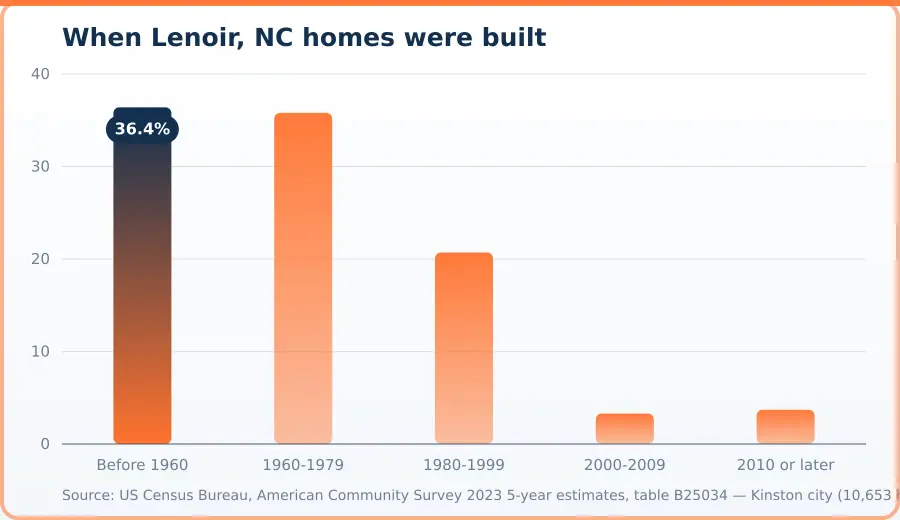
| Period | When homes were built (%) |
|---|---|
| Before 1960 | 36.4 |
| 1960-1979 | 35.8 |
| 1980-1999 | 20.7 |
| 2000-2009 | 3.3 |
| 2010 or later | 3.7 |
Source: US Census Bureau, American Community Survey 2023 5-year estimates, table B25034 — Kinston city (10,653 housing units). Retrieved October 5, 2026.
Seasonal Conditions and Mold Removal Cost in Lenoir
Spring: Thaw and Water Intrusion
Spring snowmelt and heavy rainfall increase foundation seepage and roof leaks across the region. Water entry into walls, attics, and crawl spaces expands the affected area, requiring larger containment zones and more extensive material removal—raising the scope and cost of remediation work.
Summer: Heat and Humidity Stress
Summer's warm, humid conditions accelerate mold growth once moisture takes hold. Older homes with crawl spaces throughout the foothills region face persistent moisture inflow that, combined with poor ventilation, can allow mold to colonize insulation, wooden beams, and subflooring—expanding the area needing treatment and structural assessment.
Fall: Leaf Debris and Drainage Clogs
Falling leaves clog gutters and downspouts, causing water to pool around foundations and penetrate basements or crawl spaces. Blocked drainage channels force moisture into structural materials over weeks, potentially requiring deeper cavity inspection, more extensive drying, and larger remediation areas than early-season detection would.
Winter: Freeze-Thaw Damage
Freezing temperatures crack mortar, siding, and roofing; thawing creates gaps where water enters. Damaged envelope barriers allow winter moisture to seep into walls and attics. Delayed discovery means mold spreads further into insulation and framing, increasing the materials requiring removal and the complexity of restoration work.
Related Services
Mold Removal Cost FAQs — Lenoir, NC
The cost of mold removal depends primarily on the size of the affected area, the materials involved (drywall, insulation, framing), and whether containment and rebuild work are necessary. Crawl spaces and enclosed areas often require more extensive containment than open rooms. A local provider's on-site inspection is the only way to assess these factors and determine your actual cost.
Mold grows and spreads over time, enlarging the affected area and potentially damaging more building materials. Addressing it sooner typically means less area to remediate, fewer materials to replace, and less containment work needed. Delaying can turn a contained problem into a larger, costlier one.
A local provider performs an on-site inspection to identify mold location, extent, and affected materials. Based on what they find—moisture source, accessibility, containment needs, and rebuild scope—they develop a detailed estimate. You receive the cost breakdown before work begins, so there are no surprises.
Insurance coverage for mold removal varies by policy and the cause of the mold. Some policies cover sudden water damage leading to mold; others exclude mold entirely. Contact your insurance agent to understand your coverage before work starts. A local provider can help you document the issue for any claim.
Weston Mold Remediation connects you with independent local providers in Lenoir who can schedule on-site inspections and provide cost estimates promptly. Contact us today, and we'll match you with a provider ready to assess your property and give you a clear picture of what remediation will cost.
Lenoir's foothills location and consistent humidity create persistent moisture conditions year-round, especially in older homes with crawl spaces and limited ventilation. This environment often leads to wider mold spread and may increase the scope and cost of removal. Addressing moisture control during remediation helps protect your investment long-term.
Homeowner Safety Toolkit
Verify Your Lenoir, NC Mold Remediation Company
Before you hire anyone, use these independent national resources to confirm credentials, standards, and track record.
EPA
The federal government's own guidance on identifying, cleaning up, and preventing mold growth in a home.
Mold Prevention GuideBBB
Look up any mold remediation company's complaint history, customer reviews, and accreditation status — a free, independent check before you hire.
Check StandingIICRC
Publishes the S520 standard for professional mold remediation. Confirm a company's technicians hold real, current IICRC certification before you hire them.
Verify CertificationQuestions about Mold Removal Cost in Lenoir, NC? Call (828) 344-5366 to arrange a local on-site estimate.
Call Now — (828) 344-5366Areas We Serve in Lenoir, North Carolina
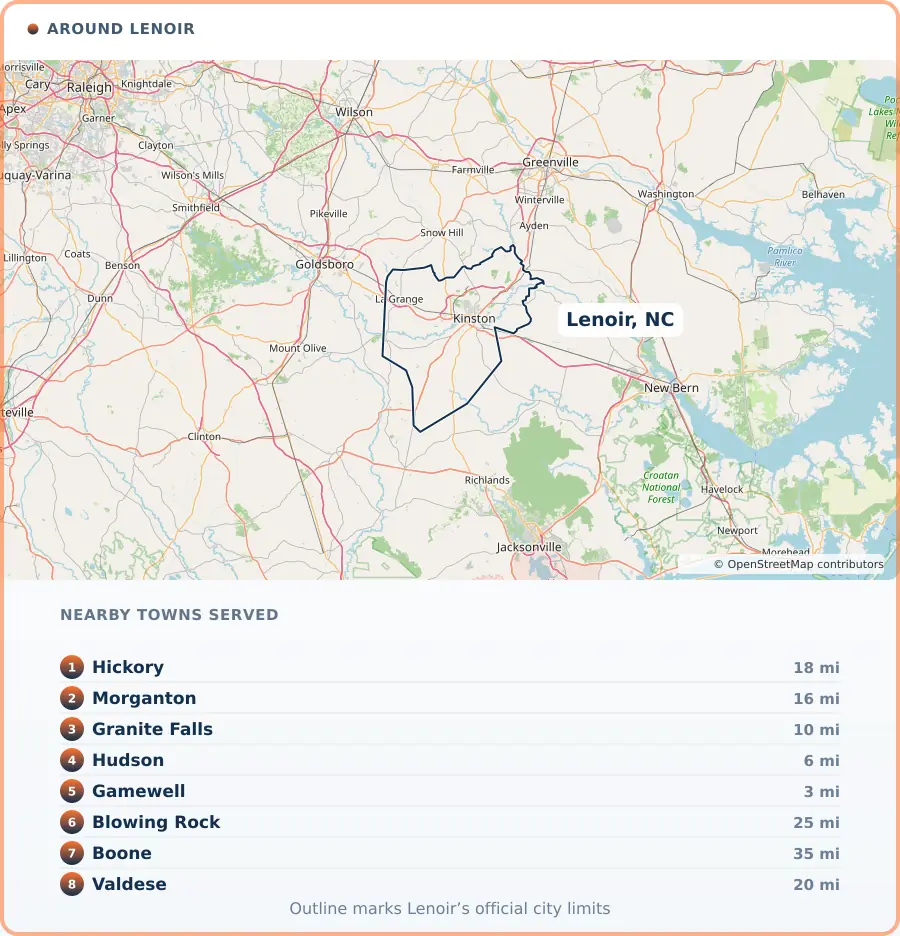
Serving Lenoir, NC and 8 communities around it. Local knowledge of how each area is built shapes how the work is handled there.
Lenoir, NC Information
Tucked into the foothills of the Blue Ridge in western North Carolina, Lenoir is a town of about 18,000 people with a working identity shaped by generations of craftsmanship. Furniture making built the town's reputation, and that heritage still echoes through manufacturers like Ethan Allen, while fiber-optic and telecommunications production at CommScope keeps Lenoir wired into a much bigger industry. A major Google data center has added new energy to the local economy in recent years, joining steady employment from Caldwell UNC Health Care and Caldwell County Schools.
Around Downtown Lenoir and out toward Hibriten, the town carries that same blend of old and new — mill-town grit alongside modern industry, small-town familiarity alongside big employers. It's a community built on making things, educating kids, and caring for neighbors, set against a backdrop of Carolina foothill scenery.
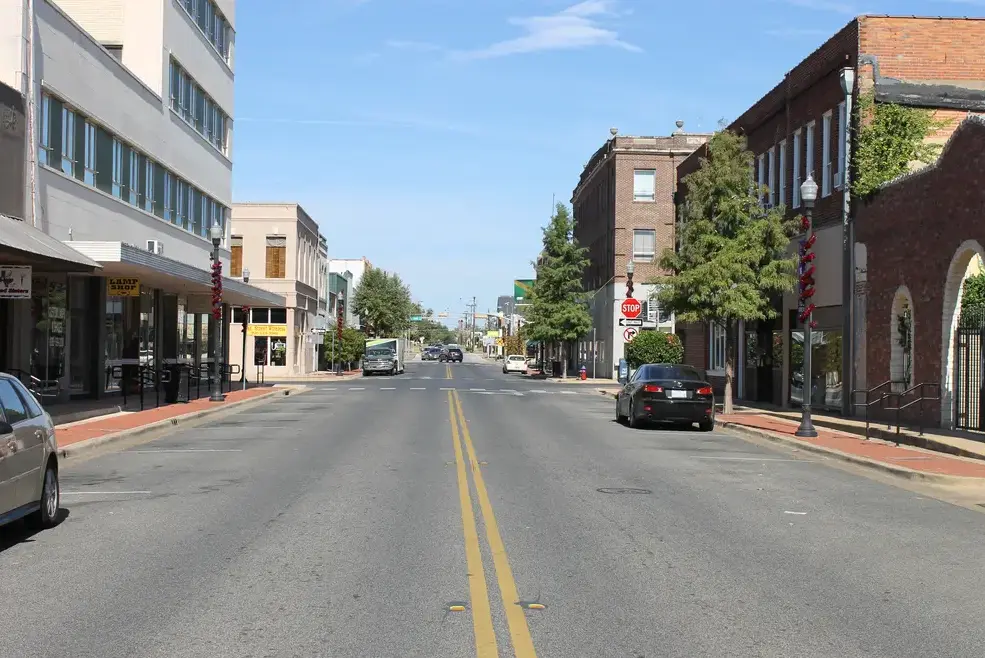
Photo: Billy Hathorn, CC BY-SA 3.0