

Crawl Space Mold Removal in Lenoir, NC
Lenoir's foothills location brings persistent humidity that creates ideal conditions for mold growth in older homes, particularly in crawl spaces where ventilation struggles to keep moisture in check. Crawl space mold removal becomes essential when high indoor humidity and poor air circulation allow mold to establish itself below your living areas, affecting both the structural integrity of your home and the air quality you and your family breathe. Weston Mold Remediation connects you with local providers in Lenoir who specialize in identifying and removing mold from crawl spaces, helping protect your property and indoor environment.
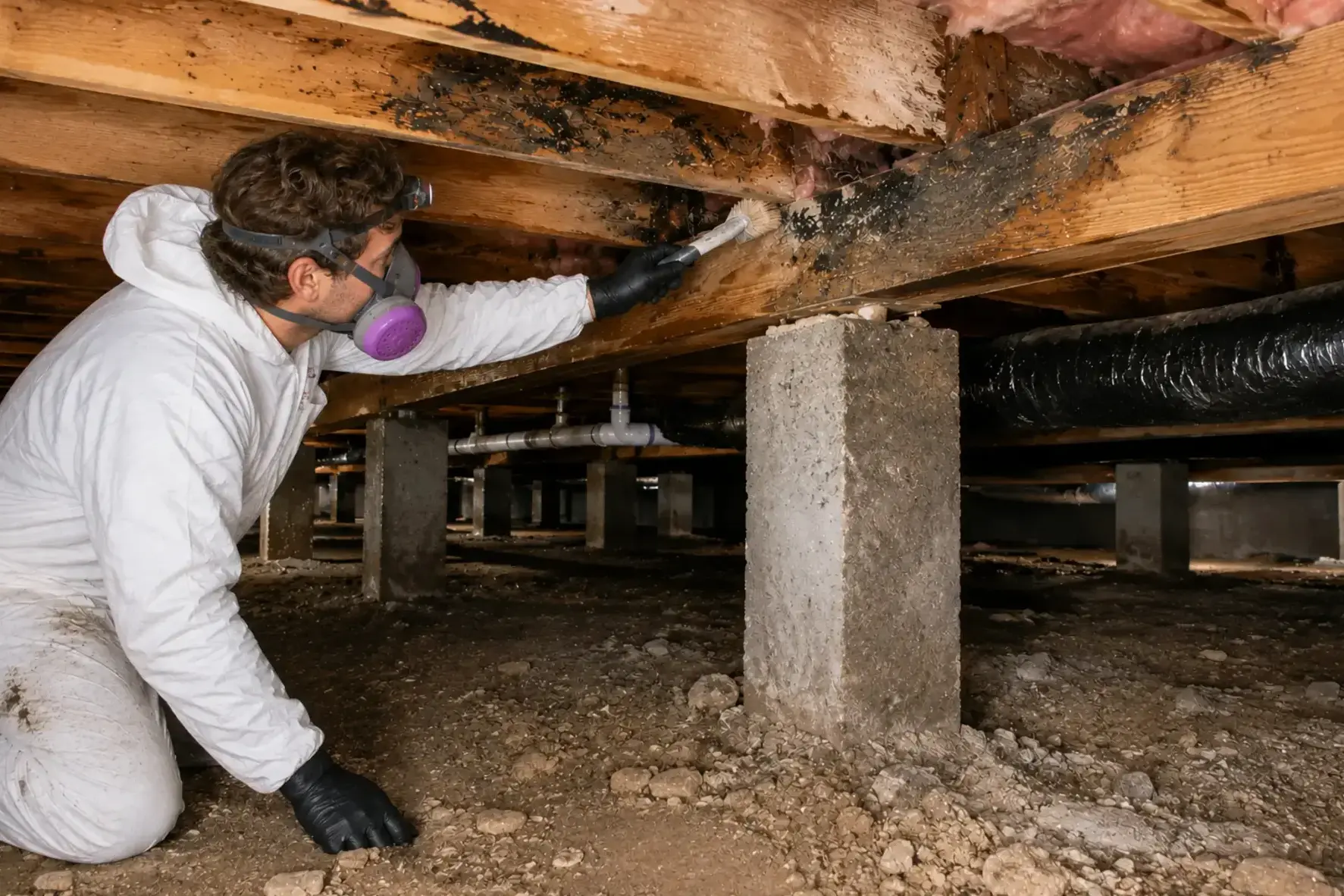
What gets cleaned in a crawl space, and what comes out
Two questions decide the scope of any mold job: what is it growing on, and how much of it is there. The EPA publishes an answer for both, and this is that guidance applied to the materials you would expect in a crawl space.
| Material | Under 10 sq ftabout a cabinet door, or one ceiling tile | 10 to 100 sq ftroughly one wall, or a small bathroom | Over 100 sq ftmore than one room's worth of surface |
|---|---|---|---|
| Wood surfacesfloor joists, subfloor, beams and piersEPA, Table 2 | Wet vacuumDamp wipeHEPA vacuum | Wet vacuumDamp wipeHEPA vacuum | Wet vacuumDamp wipeHEPA vacuumRemove and discard |
| Concrete or cinder blockblock piers, stem walls and any slabEPA, Table 2 | Wet vacuumHEPA vacuum | Wet vacuumHEPA vacuum | Wet vacuumHEPA vacuum |
What those methods mean, in EPA's words
- Wet vacuum
Wet vacuums are vacuum cleaners designed to collect water. They can be used to remove water from floors, carpets and hard surfaces where water has accumulated.
EPA, cleanup methods- Damp wipe
Mold can generally be removed from nonporous (hard) surfaces by wiping or scrubbing with water, or water and detergent.
EPA, cleanup methods- HEPA vacuum
HEPA (High-Efficiency Particulate Air) vacuums are recommended for final cleanup of remediation areas after materials have been thoroughly dried and contaminated materials removed.
EPA, cleanup methods- Remove and discard
Building materials and furnishings that are contaminated with mold growth and are not salvageable should be double-bagged using 6-mil polyethylene sheeting.
EPA, cleanup methods
Removed and replaced, whatever the area
- Fiberglass or other insulation — batt insulation between the joists.
Fiber glass, or any other insulation material that is wet or visibly moldy (or if an unacceptable odor is present) should be removed and replaced by a qualified heating and cooling system contractor.
EPA, air duct cleaningEPA states this in its heating-and-cooling guidance and it is quoted here as written. Its water-damage table reaches the same conclusion for both fiberglass and cellulose insulation.
These guidelines are for damage caused by clean water. If you know or suspect that the water source is contaminated with sewage, or chemical or biological pollutants, then Personal Protective Equipment and containment are required by OSHA.
EPA, Table 1Porous materials that are wet and have mold growing on them may have to be discarded.
EPA, cleanup methodsMold can grow on wood, drywall, carpet and furniture if they remain wet for more than 24 hours.
EPA, flood cleanup
A missing or torn vapor barrier lets ground moisture into the framing continuously, so the lasting fix is the barrier and the drainage rather than the cleaning. Joists and subfloor are wood and are usually salvageable even at large areas. The batt insulation between them is not — and pulling it is often how the real extent of the problem first becomes visible.
This is not rare locally: Lenoir County has recorded flood events in 18 separate years, most often in the 2010s, and most recently in 2025. Water that sat years ago leaves growth behind whether anyone found it or not.Source: NOAA Storm Events Database, Lenoir County (1996-2026; Flood, Flash Flood and Coastal Flood events)
Crawl Space Mold Removal Services for Lenoir Homeowners
Lenoir's foothills location and persistent humidity create conditions where crawl spaces become particularly vulnerable to mold growth. The region's moisture-rich air, combined with the limited ventilation common in older homes throughout the area, allows dampness to accumulate beneath houses year-round. When humidity remains high in crawl spaces, mold colonies can develop quietly out of sight, compromising both the structural integrity of your home and the quality of air circulating through living spaces above. Property owners in Lenoir increasingly recognize that crawl space mold removal is not optional maintenance—it's a necessary safeguard for indoor air quality and long-term home health.
Weston Mold Remediation connects Lenoir homeowners with independent local providers who specialize in crawl space mold removal. These professionals conduct thorough inspections to identify moisture sources and mold extent, then implement targeted removal and containment strategies designed for the specific conditions beneath your home. After removal is complete, providers work to address underlying moisture issues and restore proper ventilation to prevent recurrence. When you reach out through Weston Mold Remediation, you're connecting directly with experienced local crawl space specialists ready to restore safety and air quality to your Lenoir home.
Why Lenoir Property Owners Choose Weston Mold Remediation
Fast Local Crawl Space Mold Removal
Weston connects you with independent local providers who respond quickly to crawl space mold concerns. Fast access to removal specialists means mold growth is addressed before it spreads further into your home's foundation.
Thorough Crawl Space Mold Treatment
Effective crawl space mold removal requires identifying moisture sources and affected areas. The independent providers in Weston's network use comprehensive inspection and removal methods to address mold at its source, protecting your indoor air quality.
Clear Communication Throughout Removal
Crawl space mold removal involves confined spaces and technical decisions. Independent providers connected through Weston explain findings, removal steps, and next actions in plain language so you understand the work being done.
Crawl Space Mold in Foothills Homes
Lenoir's location near the Blue Ridge Mountains creates persistent moisture conditions year-round. Older homes with crawl spaces face particular risk when ventilation is inadequate—conditions favoring mold growth that targeted removal addresses.
How Our Crawl Space Mold Removal Process Works
Schedule Your Crawl Space Mold Removal Visit
Contact Weston Mold Remediation to connect with a local crawl space mold removal provider serving Lenoir. We'll match you with an independent professional who can assess your crawl space and discuss the scope of mold removal your home needs.
Receive Your Crawl Space Mold Assessment
The provider inspects your crawl space to identify mold growth, moisture sources, and ventilation issues common in older Lenoir homes where persistent humidity drives mold development. You'll receive findings and a clear plan for crawl space mold removal tailored to your property.
Complete Crawl Space Mold Removal & Verification
The independent provider removes mold-affected materials, applies appropriate treatments, and addresses moisture control to support a healthier crawl space. Follow-up guidance helps you maintain the space and reduce conditions that support future mold growth.
Dealing with Crawl Space Mold Removal in Lenoir? Get fast, professional help.
Call Now — (828) 344-5366Crawl Space Mold Removal Serving Lenoir, NC
Lenoir's location in the foothills of western North Carolina means persistent moisture is a year-round concern for many properties in the area. The region's elevated humidity levels create an environment where crawl spaces—common in older homes throughout Lenoir—become particularly vulnerable to mold growth. When crawl space ventilation is inadequate, moisture accumulates beneath homes, and that combination of poor air circulation and sustained dampness provides ideal conditions for mold to develop and spread. Property owners in neighborhoods like Downtown Lenoir and Hibriten often find that addressing crawl space moisture isn't optional—it's essential to protecting indoor air quality and the structural integrity of their homes.
Crawl Space Mold Removal in Lenoir requires an approach tailored to the local climate and construction patterns. Independent local providers connected through this service understand how Lenoir's moisture conditions affect crawl spaces and can assess ventilation, drainage, and humidity levels specific to each property. Early detection and thorough removal help prevent the health concerns and property damage that prolonged mold exposure can cause, making professional inspection and remediation a practical investment for homeowners facing this common regional challenge.
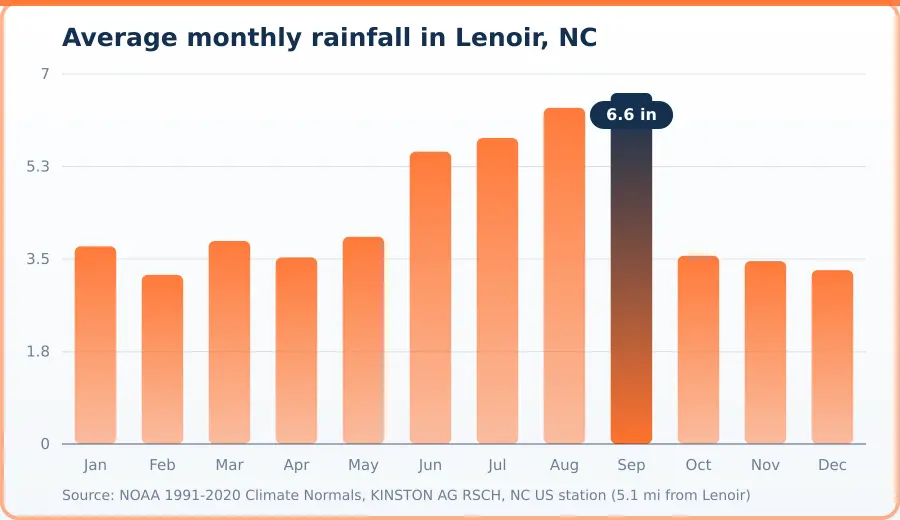
| Period | Monthly rainfall (in) |
|---|---|
| Jan | 3.7 |
| Feb | 3.2 |
| Mar | 3.8 |
| Apr | 3.5 |
| May | 3.9 |
| Jun | 5.5 |
| Jul | 5.8 |
| Aug | 6.4 |
| Sep | 6.6 |
| Oct | 3.6 |
| Nov | 3.5 |
| Dec | 3.3 |
Source: NOAA 1991-2020 Climate Normals, KINSTON AG RSCH, NC US station (5.1 mi from Lenoir). Retrieved October 5, 2026.
Crawl Space Mold Removal Across Lenoir's Seasons
Spring: Thawing & Moisture Surge
As snowmelt and spring rains arrive, crawl space moisture levels spike significantly. Standing water and increased humidity create ideal conditions for mold colonies to expand rapidly after winter dormancy. Weston Mold Remediation connects you with local providers who assess crawl space saturation and begin containment and removal before warm-season growth accelerates.
Summer: Heat & Ventilation Strain
High temperatures intensify evaporation within crawl spaces, but poor airflow—common in older Lenoir-area homes—traps that moisture as humidity rather than allowing it to escape. This cyclical heating amplifies mold growth despite warm conditions. Our referral service links property owners with providers experienced in identifying ventilation failures and executing removal in homes from neighborhoods like Hibriten to Lower Creek.
Fall: Foothills Humidity & Seasonal Settling
Lenoir's proximity to the Blue Ridge Mountains sustains persistent moisture inflow even as temperatures cool, keeping crawl spaces damp year-round. Seasonal pressure changes can also shift how air moves through older crawl spaces, sometimes worsening stagnation. Weston Mold Remediation helps property owners schedule inspections and removal work before winter compounds existing moisture problems.
Winter: Cold, Condensation & Containment
Cold outdoor air meeting warmer, humid crawl space conditions triggers condensation on surfaces and framing, fueling mold persistence through the season. While freeze-thaw cycles can stress foundations, the real concern is sustained dampness beneath heated homes. Weston Mold Remediation connects you with independent local providers ready to perform removal and restoration work during winter months when crawl space access is often clearer.
Crawl Space Mold Removal FAQs — Lenoir, NC
Crawl space mold removal typically includes inspection to identify affected areas, containment to prevent spore spread, removal of contaminated materials, application of antimicrobial treatments, and restoration of safe air quality. The independent local providers Weston Mold Remediation connects you with will assess moisture sources and structural damage, then outline a removal plan tailored to your home's specific conditions.
Weston Mold Remediation works to connect you with local crawl space mold removal providers in Lenoir promptly so you can schedule an inspection and begin addressing the problem. Response time depends on provider availability, but our network is designed to help you find qualified local help without unnecessary delay.
Crawl space mold removal costs depend on the extent of contamination, square footage affected, moisture source severity, ventilation improvements needed, and materials requiring replacement. The independent providers you connect with through Weston Mold Remediation will evaluate your crawl space and provide pricing based on the scope of work required for your property.
Expect the provider to set up containment barriers, use specialized equipment to safely remove affected materials, treat surfaces with antimicrobial solutions, and address moisture sources such as poor ventilation or water intrusion. The process protects your home's interior and occupants from spore release. Your provider will explain each step and timeline before beginning work.
After removal, maintain crawl space health by ensuring proper ventilation, managing humidity levels, fixing water leaks promptly, and keeping the space clean and dry. Regular inspections help catch moisture buildup early. Your removal provider can recommend ventilation upgrades or moisture barriers suited to your home's needs.
Lenoir's foothills location and persistent high humidity create ideal conditions for mold growth in crawl spaces, especially when ventilation is limited. Many older homes in the area have crawl spaces where moisture accumulates year-round, making regular inspection and proper airflow essential to preventing mold colonization.
Related Services
Homeowner Safety Toolkit
Verify Your Lenoir, NC Mold Remediation Company
Before you hire anyone, use these independent national resources to confirm credentials, standards, and track record.
EPA
The federal government's own guidance on identifying, cleaning up, and preventing mold growth in a home.
Mold Prevention GuideBBB
Look up any mold remediation company's complaint history, customer reviews, and accreditation status — a free, independent check before you hire.
Check StandingIICRC
Publishes the S520 standard for professional mold remediation. Confirm a company's technicians hold real, current IICRC certification before you hire them.
Verify CertificationDealing with Crawl Space Mold Removal in Lenoir, NC? Call (828) 344-5366 for 24/7 help.
Call Now — (828) 344-5366Areas We Serve in Lenoir, North Carolina
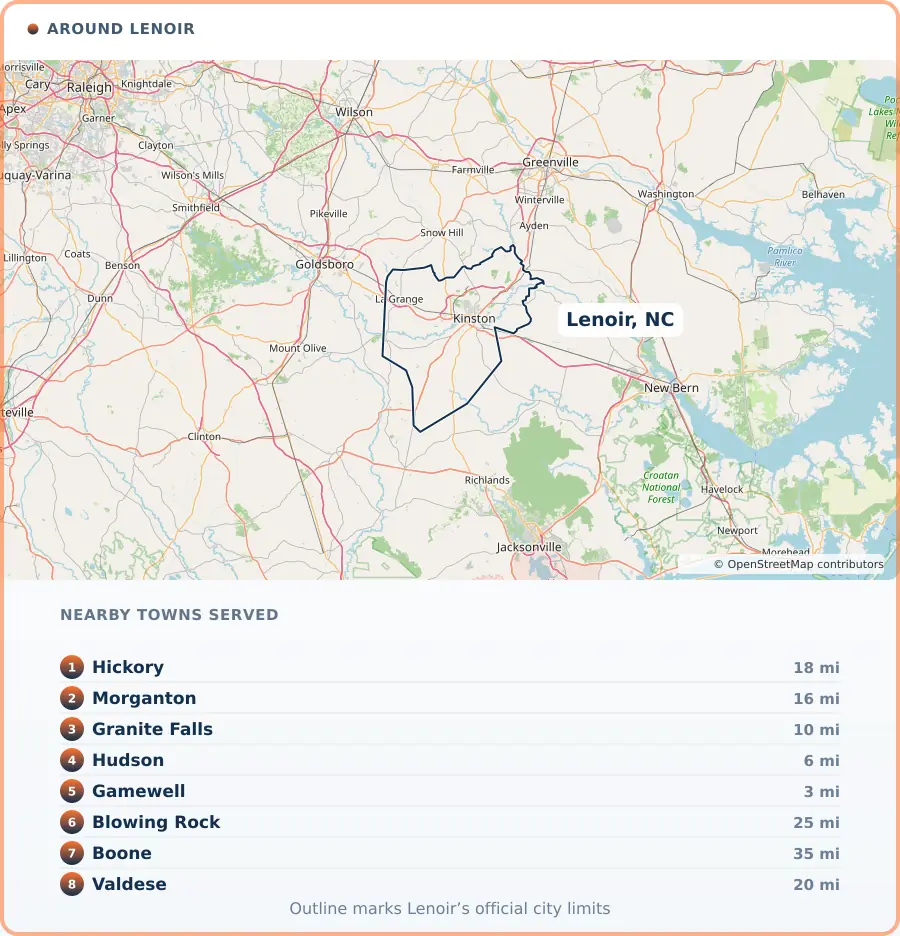
Serving Lenoir, NC and 8 communities around it. Local knowledge of how each area is built shapes how the work is handled there.
Lenoir, NC Information
Tucked into the foothills of the Blue Ridge in western North Carolina, Lenoir is a town of about 18,000 people with a working identity shaped by generations of craftsmanship. Furniture making built the town's reputation, and that heritage still echoes through manufacturers like Ethan Allen, while fiber-optic and telecommunications production at CommScope keeps Lenoir wired into a much bigger industry. A major Google data center has added new energy to the local economy in recent years, joining steady employment from Caldwell UNC Health Care and Caldwell County Schools.
Around Downtown Lenoir and out toward Hibriten, the town carries that same blend of old and new — mill-town grit alongside modern industry, small-town familiarity alongside big employers. It's a community built on making things, educating kids, and caring for neighbors, set against a backdrop of Carolina foothill scenery.
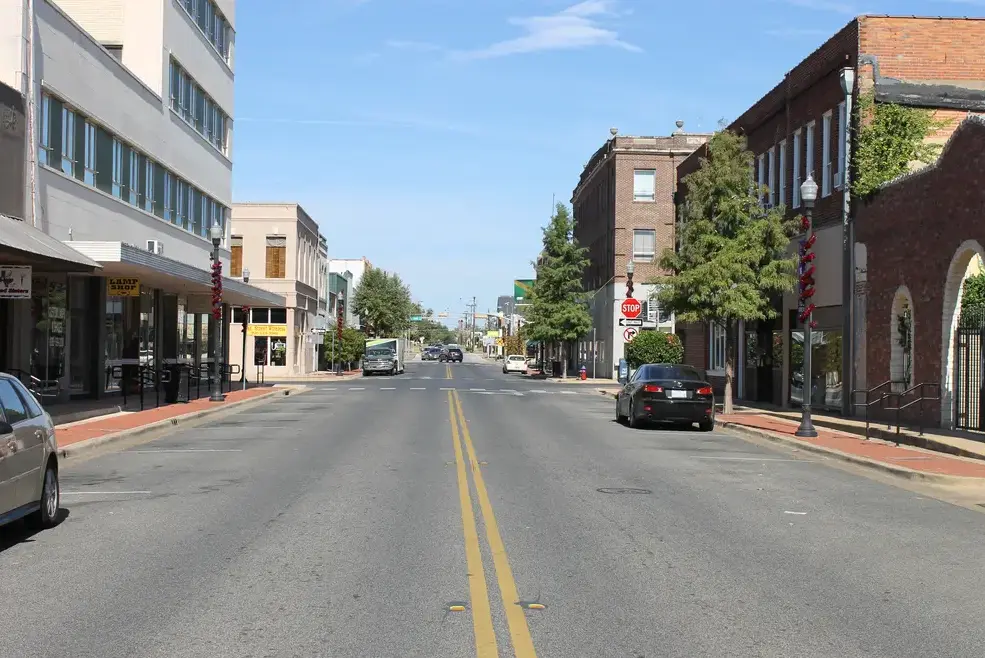
Photo: Billy Hathorn, CC BY-SA 3.0