

Ceiling Mold Removal in Lenoir, NC
Lenoir's foothills location and persistent moisture from the Blue Ridge Mountains create conditions where ceiling mold can develop year-round, particularly in older homes where ventilation challenges allow humidity to accumulate in upper-level spaces. Ceiling mold removal requires prompt attention to prevent structural damage and protect indoor air quality. Weston Mold Remediation connects Lenoir property owners with local independent providers who handle containment and removal, helping you address the problem safely and thoroughly.
What gets cleaned on a ceiling, and what comes out
Two questions decide the scope of any mold job: what is it growing on, and how much of it is there. The EPA publishes an answer for both, and this is that guidance applied to the materials you would expect on a ceiling.
| Material | Under 10 sq ftabout a cabinet door, or one ceiling tile | 10 to 100 sq ftroughly one wall, or a small bathroom | Over 100 sq ftmore than one room's worth of surface |
|---|---|---|---|
| Wallboardthe ceiling drywall itselfEPA, Table 2 | HEPA vacuum | HEPA vacuumRemove and discard | HEPA vacuumRemove and discard |
| Wood surfacesjoists and framing in the cavity aboveEPA, Table 2 | Wet vacuumDamp wipeHEPA vacuum | Wet vacuumDamp wipeHEPA vacuum | Wet vacuumDamp wipeHEPA vacuumRemove and discard |
What those methods mean, in EPA's words
- Wet vacuum
Wet vacuums are vacuum cleaners designed to collect water. They can be used to remove water from floors, carpets and hard surfaces where water has accumulated.
EPA, cleanup methods- Damp wipe
Mold can generally be removed from nonporous (hard) surfaces by wiping or scrubbing with water, or water and detergent.
EPA, cleanup methods- HEPA vacuum
HEPA (High-Efficiency Particulate Air) vacuums are recommended for final cleanup of remediation areas after materials have been thoroughly dried and contaminated materials removed.
EPA, cleanup methods- Remove and discard
Building materials and furnishings that are contaminated with mold growth and are not salvageable should be double-bagged using 6-mil polyethylene sheeting.
EPA, cleanup methods
Removed and replaced, whatever the area
- Ceiling tiles — drop-ceiling or acoustic tiles.
Discard and replace.
EPA, Table 1This is the action EPA's water-damage table gives for ceiling tiles. It is the one material here with no size threshold to weigh. - Fiberglass or other insulation — any insulation sitting on top of the ceiling.
Fiber glass, or any other insulation material that is wet or visibly moldy (or if an unacceptable odor is present) should be removed and replaced by a qualified heating and cooling system contractor.
EPA, air duct cleaningEPA states this in its heating-and-cooling guidance and it is quoted here as written. Its water-damage table reaches the same conclusion for both fiberglass and cellulose insulation.
These guidelines are for damage caused by clean water. If you know or suspect that the water source is contaminated with sewage, or chemical or biological pollutants, then Personal Protective Equipment and containment are required by OSHA.
EPA, Table 1Porous materials that are wet and have mold growing on them may have to be discarded.
EPA, cleanup methodsMold can grow on wood, drywall, carpet and furniture if they remain wet for more than 24 hours.
EPA, flood cleanup
Ceiling mold nearly always means water arriving from above — a roof, a supply or waste line, or a bathroom on the floor above. The ceiling is the symptom, so cleaning it without finding the source buys a few months at most. Drop-ceiling tile is the one material here with no decision to make: EPA's water-damage table lists it as discard and replace.
Lenoir gets around 15.4 days a year with an inch or more of rain, most of them in June — and a downpour finds a flashing or a seal that a drizzle never would.Source: NOAA 1991-2020 Climate Normals, KINSTON AG RSCH, NC US station (5.1 mi from Lenoir)
Ceiling Mold Removal in Lenoir, NC
Lenoir's location in the foothills of western North Carolina creates persistent humidity conditions that homeowners must manage year-round. The region's moisture-rich air, combined with older homes featuring crawl spaces with limited ventilation, creates an ideal environment for mold to develop in ceiling cavities and overhead structural areas. When moisture accumulates above, mold can spread quickly through insulation, framing, and drywall—making ceiling mold removal a critical priority for property owners across Lenoir who want to protect both their homes and indoor air quality.
Weston Mold Remediation connects Lenoir property owners with local independent providers who specialize in identifying and removing ceiling mold at its source. The process begins with a thorough inspection to locate affected areas, assess moisture entry points, and determine the extent of growth. Once identified, providers work to contain the affected zone, safely remove contaminated materials, and address the underlying moisture issue to help prevent recurrence. This comprehensive approach to ceiling mold removal protects your home's structural integrity and helps restore a healthier indoor environment for your family.
Why Lenoir Property Owners Choose Weston Mold Remediation
Ceiling Mold Removal Experience
Weston connects you with local providers experienced in ceiling mold removal across Lenoir homes. Their knowledge of how moisture travels and settles overhead ensures thorough identification and safe containment before treatment begins.
Fast Ceiling Mold Response
Local ceiling mold removal providers in the Weston network respond quickly to your call. Rapid assessment and prompt treatment help prevent mold from spreading deeper into framing and insulation overhead.
Clear Ceiling Removal Communication
Weston's independent providers explain ceiling mold removal findings in plain language. You'll understand the scope of work, containment steps, and what to expect during and after treatment, with no guesswork.
Lenoir's Humidity Demands Thorough Removal
Lenoir's persistent moisture environment—fueled by proximity to the Blue Ridge Mountains and year-round humidity—creates ideal conditions for ceiling mold in homes with older construction. Poor ventilation in crawl spaces often allows humidity to rise, supporting mold growth overhead. Weston's local providers understand this moisture pattern and perform thorough ceiling mold removal to address the full scope of the problem, not just surface growth.
How The Ceiling Mold Removal Process Works
Schedule Your Ceiling Mold Removal Visit
Contact Weston Mold Remediation to arrange a ceiling mold inspection with a local provider in Lenoir, NC. We'll connect you with an independent remediation professional who can assess the extent of ceiling mold growth and identify moisture sources.
Assessment & Ceiling Mold Diagnosis
Your local provider inspects the affected ceiling area to determine mold type, contamination scope, and underlying causes—often persistent humidity common in older Lenoir homes with limited crawl space ventilation. A clear diagnosis guides the removal plan and helps prevent recurrence.
Ceiling Mold Removal & Containment
The independent provider removes affected ceiling materials, applies appropriate containment and remediation techniques, and addresses moisture conditions driving the mold. Follow-up guidance helps you maintain ceiling integrity and avoid future mold growth.
Dealing with Ceiling Mold Removal in Lenoir? Get fast, professional help.
Call Now — (828) 344-5366Ceiling Mold Removal for Lenoir Homes
Lenoir's location in the foothills of western North Carolina creates persistent moisture conditions that make ceiling mold a common concern for property owners. The region's year-round humidity—driven by proximity to the Blue Ridge Mountains and frequent atmospheric moisture—means that excess indoor moisture doesn't dry quickly, even between rain events. This sustained dampness makes attics and upper-level spaces particularly vulnerable to mold growth, especially in older homes where ventilation may be limited or deteriorated. Ceiling mold often develops silently in these spaces before becoming visible, which is why early detection and professional removal are important for protecting both the structure and indoor air quality.
Many established properties throughout Lenoir, including those in neighborhoods like Hibriten and Downtown Lenoir, feature aging construction where attic ventilation and moisture management systems are outdated or insufficient. When crawl spaces beneath homes lack proper airflow, humidity rises through the structure and concentrates in ceiling cavities and upper floors. Professional ceiling mold removal addresses not only the visible mold but also identifies moisture sources—whether poor ventilation, roof leaks, or indoor humidity buildup—so that removal is lasting and thorough. Connecting with a local remediation provider who understands Lenoir's specific moisture challenges ensures the right containment, removal, and prevention approach for your home.
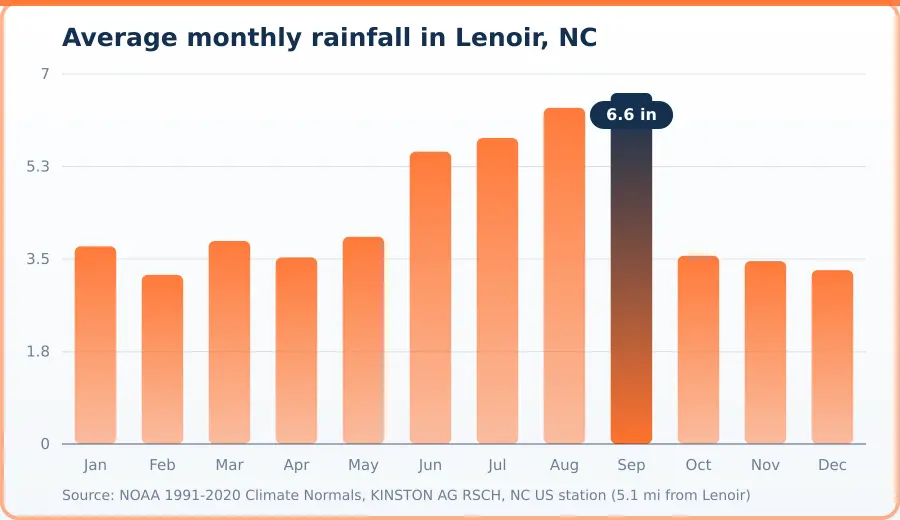
| Period | Monthly rainfall (in) |
|---|---|
| Jan | 3.7 |
| Feb | 3.2 |
| Mar | 3.8 |
| Apr | 3.5 |
| May | 3.9 |
| Jun | 5.5 |
| Jul | 5.8 |
| Aug | 6.4 |
| Sep | 6.6 |
| Oct | 3.6 |
| Nov | 3.5 |
| Dec | 3.3 |
Source: NOAA 1991-2020 Climate Normals, KINSTON AG RSCH, NC US station (5.1 mi from Lenoir). Retrieved October 5, 2026.
Seasonal Ceiling Mold Patterns in Lenoir, NC
Spring: Active Growth Season
Spring warming and increased rainfall across the foothills create ideal conditions for ceiling mold to flourish. As moisture accumulates in attics and upper-story spaces, mold colonies expand visibly on drywall and joists. Weston Mold Remediation connects Lenoir property owners with local providers who inspect ceilings early, identify growth before it spreads, and execute containment and removal before warmer months intensify the problem.
Summer: Persistent Moisture Challenge
High humidity throughout the region sustains ceiling mold even without active rainfall. Poor ventilation in crawl spaces and attics allows moisture to rise into ceiling cavities, feeding existing mold and supporting new colonization. Our referral service links homeowners with independent providers who assess ceiling moisture sources, remove affected materials safely, and address ventilation to reduce recurrence during humid months ahead.
Fall: Detection and Prevention
Cooling temperatures can mask active ceiling mold growth, but fall is an ideal window for inspection before heating season traps interior moisture. Spotting discoloration, soft drywall, or musty odors in ceilings now prevents larger infestations from forming overhead during winter. Weston Mold Remediation helps Lenoir property owners schedule thorough ceiling inspections and removal work with local specialists before cold-weather moisture patterns take hold.
Winter: Condensation and Containment
Heating homes in winter creates temperature gradients that drive warm, humid air into uninsulated ceiling cavities, where it condenses and feeds mold growth. While snow may limit outdoor moisture entry, indoor ceiling mold often accelerates during this season. Our network connects property owners with independent providers who remove winter-active mold from ceilings, improve attic insulation and air barriers, and prevent spring reinfestation.
Ceiling Mold Removal FAQs — Lenoir, NC
Ceiling mold removal starts with assessment to identify affected areas and moisture sources. The independent provider will contain the work area to prevent spore spread, remove contaminated drywall or materials, treat surfaces, address underlying moisture problems, and restore the ceiling. The goal is safe removal while protecting your indoor air quality and preventing recurrence.
Weston Mold Remediation works to connect Lenoir property owners with local independent ceiling mold removal providers promptly. Response times vary by provider availability, but we prioritize matching you with someone nearby who can evaluate your ceiling mold situation and discuss next steps without unnecessary delay.
Ceiling mold removal costs depend on the affected area size, material type, moisture source complexity, and extent of structural damage. Whether the mold is in a small spot or spans multiple areas will influence scope and labor. The independent provider you're connected with will assess your specific situation and discuss pricing during consultation.
Before ceiling mold removal, clear the work area of personal items and furniture if possible. Discuss with the independent provider whether you should vacate during work, especially if large areas are affected. They'll explain containment procedures and any temporary disruptions to expect. Follow their guidance on ventilation and safety precautions during the removal process.
After ceiling mold removal, address the moisture source—whether it's roof leaks, condensation, or poor ventilation. Maintain indoor humidity below 50%, ensure gutters and downspouts drain properly away from the home, and improve attic or upper-level air circulation. Regular inspections for water stains or soft spots help catch problems early before mold returns.
Lenoir's foothills location brings persistent moisture throughout much of the year. Many older homes in the area have crawl spaces with limited ventilation, and elevated indoor humidity readily rises to ceilings and attics. This combination of year-round moisture and poor air movement creates ideal conditions for ceiling mold to develop, making removal and moisture control essential.
Related Services
Homeowner Safety Toolkit
Verify Your Lenoir, NC Mold Remediation Company
Before you hire anyone, use these independent national resources to confirm credentials, standards, and track record.
EPA
The federal government's own guidance on identifying, cleaning up, and preventing mold growth in a home.
Mold Prevention GuideBBB
Look up any mold remediation company's complaint history, customer reviews, and accreditation status — a free, independent check before you hire.
Check StandingIICRC
Publishes the S520 standard for professional mold remediation. Confirm a company's technicians hold real, current IICRC certification before you hire them.
Verify CertificationDealing with Ceiling Mold Removal in Lenoir, NC? Call (828) 344-5366 for 24/7 help.
Call Now — (828) 344-5366Areas We Serve in Lenoir, North Carolina
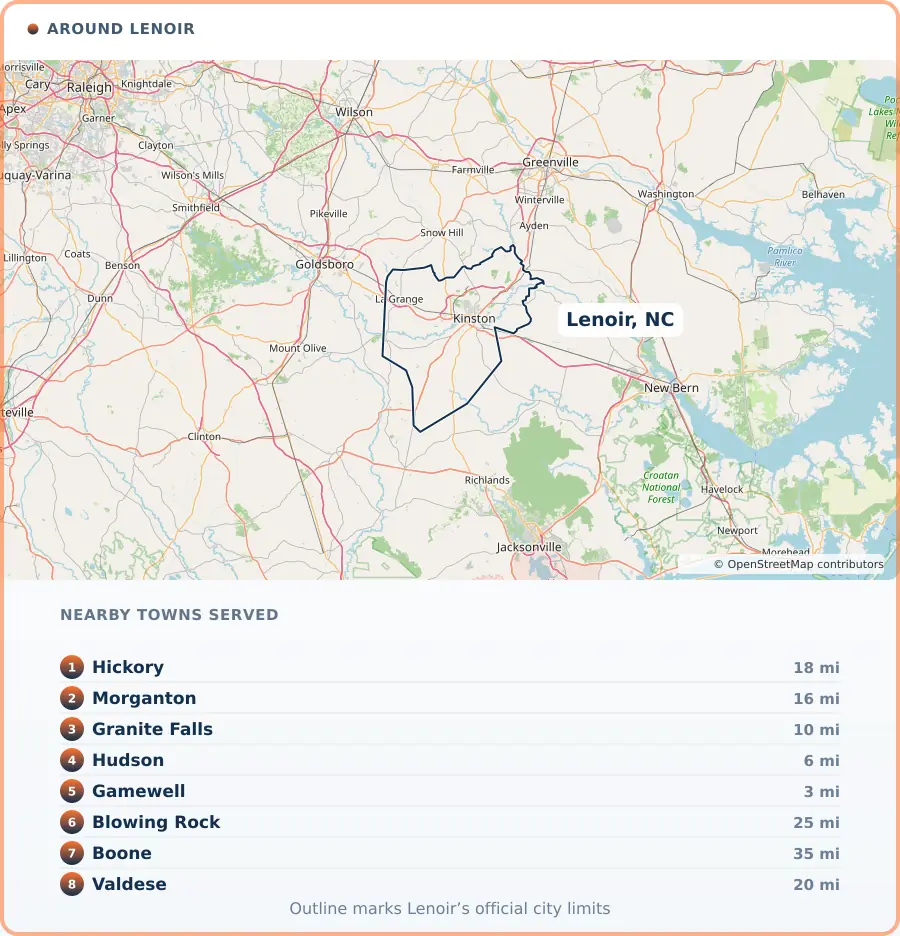
Serving Lenoir, NC and 8 communities around it. Local knowledge of how each area is built shapes how the work is handled there.
Lenoir, NC Information
Tucked into the foothills of the Blue Ridge in western North Carolina, Lenoir is a town of about 18,000 people with a working identity shaped by generations of craftsmanship. Furniture making built the town's reputation, and that heritage still echoes through manufacturers like Ethan Allen, while fiber-optic and telecommunications production at CommScope keeps Lenoir wired into a much bigger industry. A major Google data center has added new energy to the local economy in recent years, joining steady employment from Caldwell UNC Health Care and Caldwell County Schools.
Around Downtown Lenoir and out toward Hibriten, the town carries that same blend of old and new — mill-town grit alongside modern industry, small-town familiarity alongside big employers. It's a community built on making things, educating kids, and caring for neighbors, set against a backdrop of Carolina foothill scenery.

Photo: Billy Hathorn, CC BY-SA 3.0